30 July to 22 October 2026 | Venue: Kop van Java, Amsterdam | Free admission
This summer, the Amsterdam Museum and the National Slavery Museum are bringing the stories of Amsterdam’s Moluccans into the public space. To mark the commemorative year ‘75 years of Moluccans in Amsterdam’, the museums, in collaboration with the City of Amsterdam, will open a major outdoor exhibition at the Kop van Java on Thursday 30 July.
The exhibition comprises 16 photographic portraits of Moluccans living in Amsterdam. The guest curator is Huib Akihary, an art historian and former curator and director of the Moluccan Historical Museum. For the exhibition, he interviewed Moluccans living in Amsterdam about their lives in the city and their family histories.
Through these personal stories, visitors are taken on a journey through a history that has linked the Moluccas and Amsterdam for more than four centuries. The story begins in the colonial period, when Amsterdam played a significant role in trade, the exercise of power and exploitation across the Indonesian archipelago. The consequences of this are still felt today: in the service of many Moluccan men in the colonial army of the former Dutch East Indies (KNIL), in the forced migration of Moluccan families to the Netherlands in 1951, and in the presence of Moluccan Amsterdammers who help shape the city and its culture.
The neighbourhood
The Dutch-Moluccan photographer Eva van Kesteren created a new series of 16 photographic portraits for the exhibition. The series is based on the concept of the neighbourhood: the name given by many Moluccan communities to the housing estates where they were collectively housed following their arrival in the Netherlands from 1951 onwards. Van Kesteren photographed the subjects in their own neighbourhood and, through this photo series, creates, as it were, a new, contemporary neighbourhood: a meeting place where passers-by can discover the stories of Amsterdam’s Moluccans.
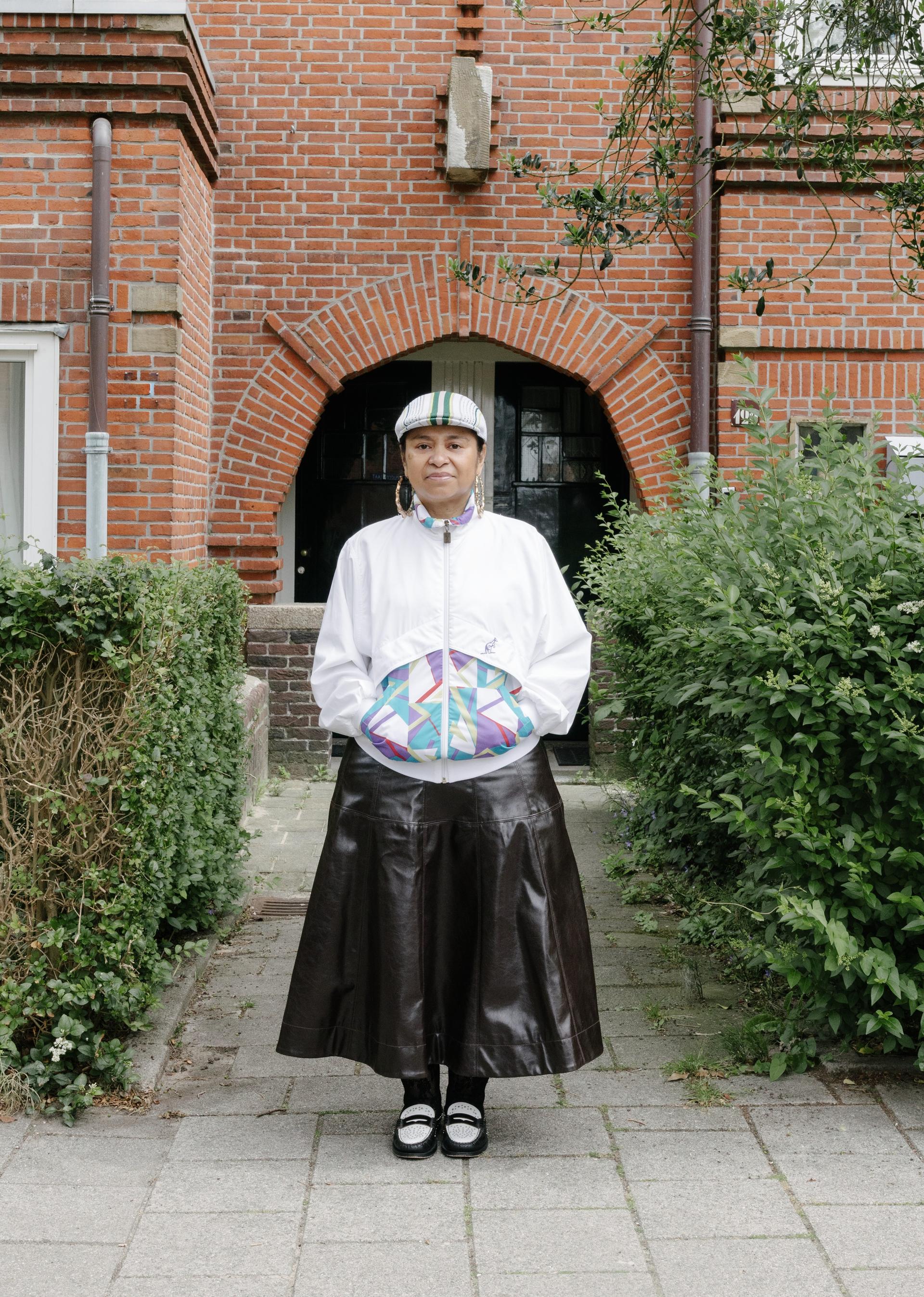
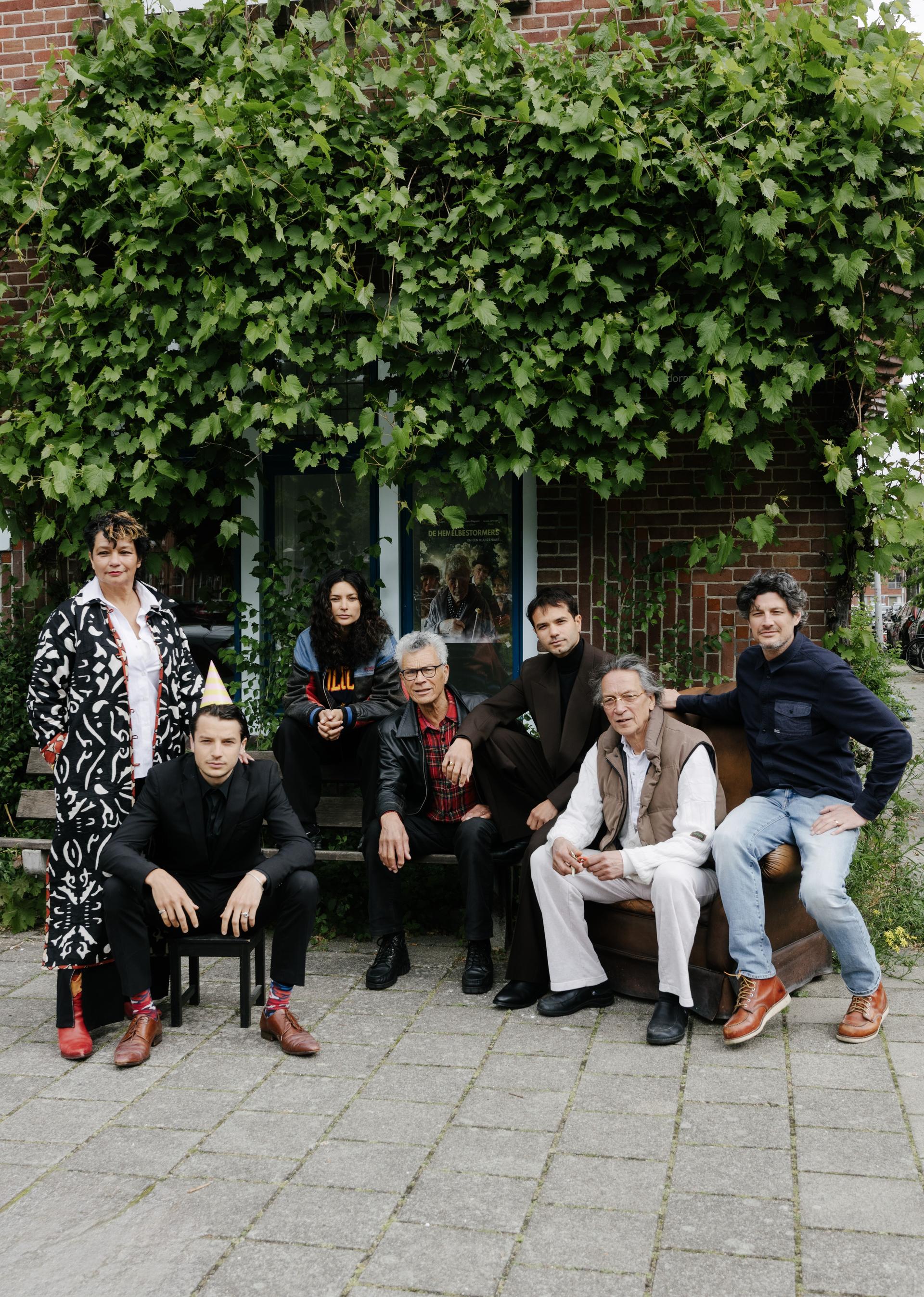
Photo on the left: portrait of Vanessa Wattimena – Photo on the right: family portrait of the Apituley family
Photography: Eva van Kesteren
One of the people featured is Vanessa Wattimena, also known as ‘Nessie’. She grew up in a Moluccan neighbourhood and is committed to raising the profile of Moluccan culture and heritage in Amsterdam. Through her business, NESSIE, and various community projects, she brings people together and keeps recipes and traditions alive.
Another story comes from an earlier generation and shows that the history of the Moluccans in Amsterdam goes back further than 1951. Esther Apituley recounts how her grandfather, Dr Hubertus Domingo Jan Apituley, came to Amsterdam at the start of the 20th century to study medicine. He qualified as a doctor in Amsterdam in 1909 and settled in the city with his family in 1924. Her father, Herman Apituley, subsequently became an ophthalmologist in Amsterdam-Noord
“The histories of the Moluccas and Amsterdam have been intertwined for centuries,” says Imara Limon, Head of Curators at the Amsterdam Museum. “That sense of connection arose in a colonial context and continues to have an impact on families and communities to this day. With this exhibition, we are highlighting how that history forms part of Amsterdam. As a network museum, we work together with partners across the city to bring such stories to light and give them a permanent place in Amsterdam’s history.”
“Samangat! means “Great!” The Moluccans, beautifully portrayed by the Dutch-Moluccan photographer Eva van Kesteren, feel first and foremost that they are Amsterdammers and proudly show this at the exhibition ‘Samangat! Moluccan in Amsterdam’,” said guest curator Huib Akihary. “Each of the people featured has their own story to tell about their Moluccan roots, their family history and their connection to Amsterdam – and, above all, how they feel like true Amsterdammers. Wonderful stories about happiness, resilience, hope and connection with one another – and, above all, with fellow Amsterdammers. We are Amsterdammers and we are Moluccan: “Samangat!” Brilliant!”
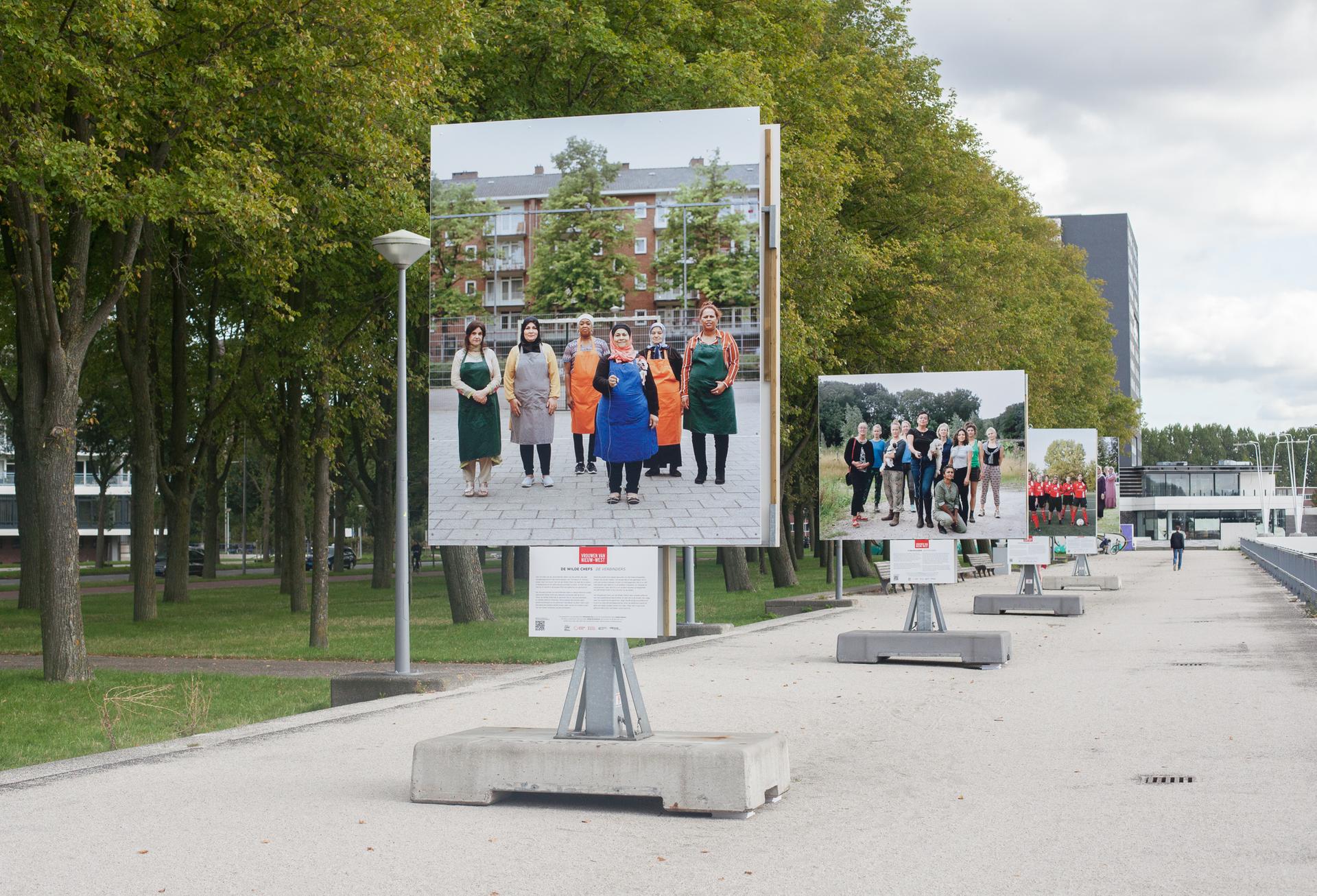
A previous outdoor exhibition by the Amsterdam Museum – ‘Women of Amsterdam’.
Photography: Willemieke Kars
Focus on the history of the Moluccan community in Amsterdam
This commemorative year marks 75 years since the arrival of Moluccan KNIL soldiers and their families in the Netherlands. In Amsterdam, it provides an opportunity to raise the profile of Moluccan-Amsterdam history and give it a prominent place in the city’s narrative. The Amsterdam Museum, in collaboration with the City of Amsterdam and the National Slavery Museum, is bringing this to life with the outdoor exhibition Samangat! Moluccans in Amsterdam on the northern tip of Java.
The exhibition ties in with the future site of the National Slavery Museum at the Kop on the island of Java. The National Slavery Museum tells the full story of the Netherlands’ history of slavery: from the Americas to the transatlantic and Indian Ocean regions. In the meantime, the museum is organising programmes and pop-up exhibitions on various topics relating to the history of slavery and its impact across the Kingdom. As part of the commemorative year, a free presentation on the successful Moluccan footballers Janny Timisela and Rocky Hehakaija is on display at Hotel Jakarta Amsterdam, within walking distance of Samangat!.
The outdoor exhibition Samangat! Moluccans in Amsterdam It will be on display from 30 July to 22 October 2026 at the Kop van Java in Amsterdam and is open to the public free of charge.
About the Amsterdam Museum
The Amsterdam Museum is a city museum that has been connecting residents and visitors with the city and with one another since 1926. Drawing on Amsterdam’s status as a ‘miniature metropolis’, we collect and present objects and stories that shed light on the city’s past, present and future.
The collection comprises more than 100,000 objects and spans over 750 years of Amsterdam’s history, art and heritage. The Amsterdam Museum works with a wide range of partners across the city to develop exhibitions, public programmes and other projects at various locations in Amsterdam.
The Amsterdam Museum is open daily at two permanent locations: Huis Willet-Holthuysen on the Herengracht and Amsterdam in Motion in Westergas Culture Park. In the 17th-century canal-side house Huis Willet-Holthuysen, visitors can discover both historical heritage and contemporary art. At Amsterdam in Motion, the world’s largest multimedia city model takes centre stage in a multifaceted narrative about Amsterdam and its people. Meanwhile, the main site on Kalverstraat is being renovated, in close collaboration with the City of Amsterdam, to become the city museum of the future.
For more information and our current programme, please visit amsterdammuseum.nl.




 Nederlands
  English (UK)
  Français